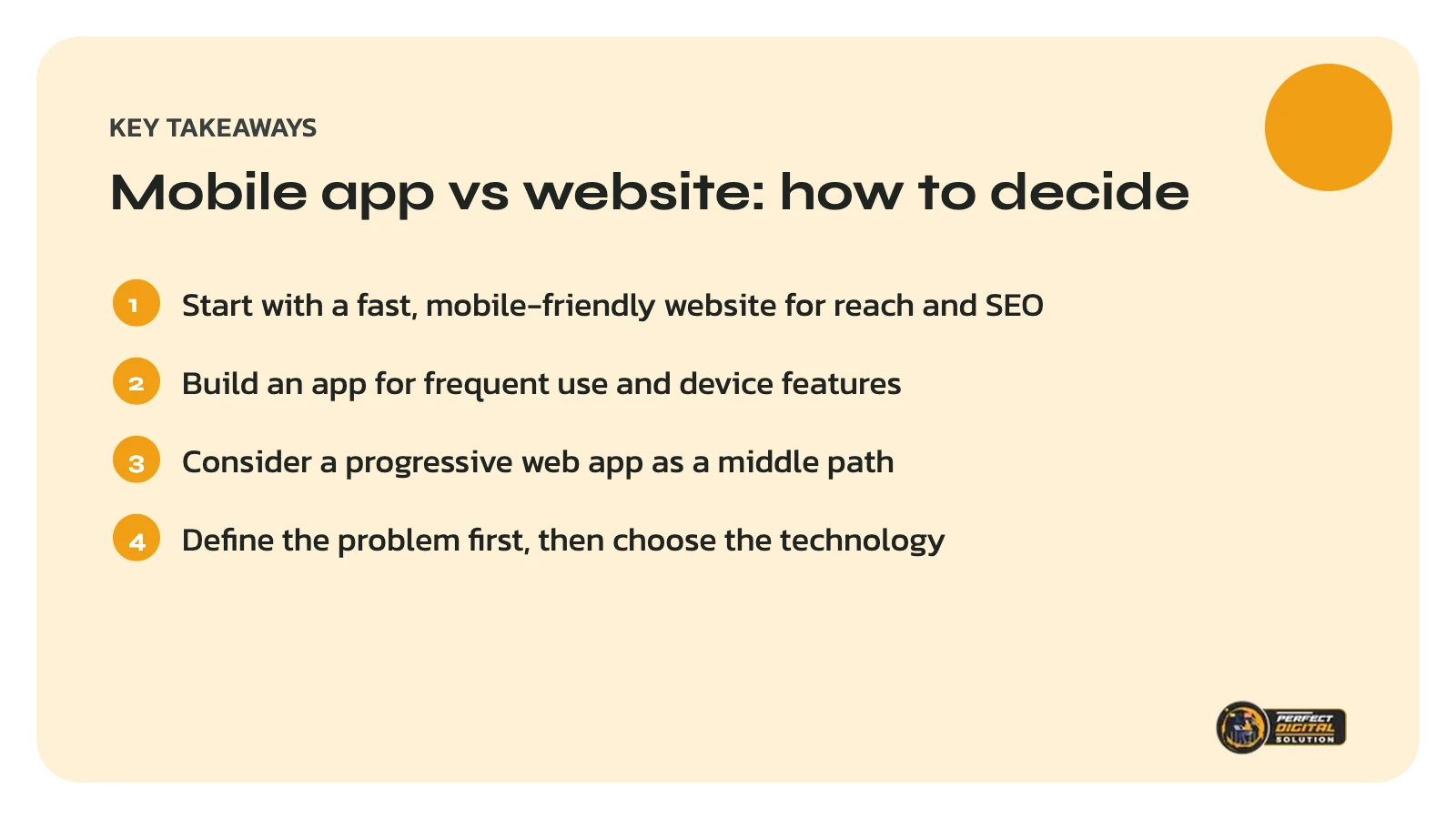
Quick answer: most businesses should start with a fast, mobile-friendly website, because it reaches anyone with a browser and can be found in Google. Build a mobile app when customers will use it repeatedly and need features a website cannot offer well, such as offline access, device features or frequent logged-in use. The mobile app vs website decision comes down to how often people will use it and what they need it to do.
Business owners often ask whether they need an app or just a better website. This guide compares the options in plain language, including a middle path called a progressive web app.
What is the difference between a mobile app and a mobile website?
A mobile-friendly website runs in a browser and adapts to any screen, while a native app is downloaded from the Apple App Store or Google Play and installed on the device.
- Website: one build works on every device, no download needed, and pages can rank in Google.
- Native app: built for iOS, Android or both, with full access to device features and a place on the home screen.
Mobile app vs website at a glance
| Mobile-friendly website | Native mobile app | |
|---|---|---|
| Reach | Anyone with a browser | People who download it |
| Discovery | Google search, links, ads | App stores, marketing, your website |
| Device features | Some, through the browser | Full: camera, GPS, notifications, offline |
| Updates | Instant for everyone | Store review and user updates |
| Build and upkeep | Usually lower | Usually higher, often two platforms |
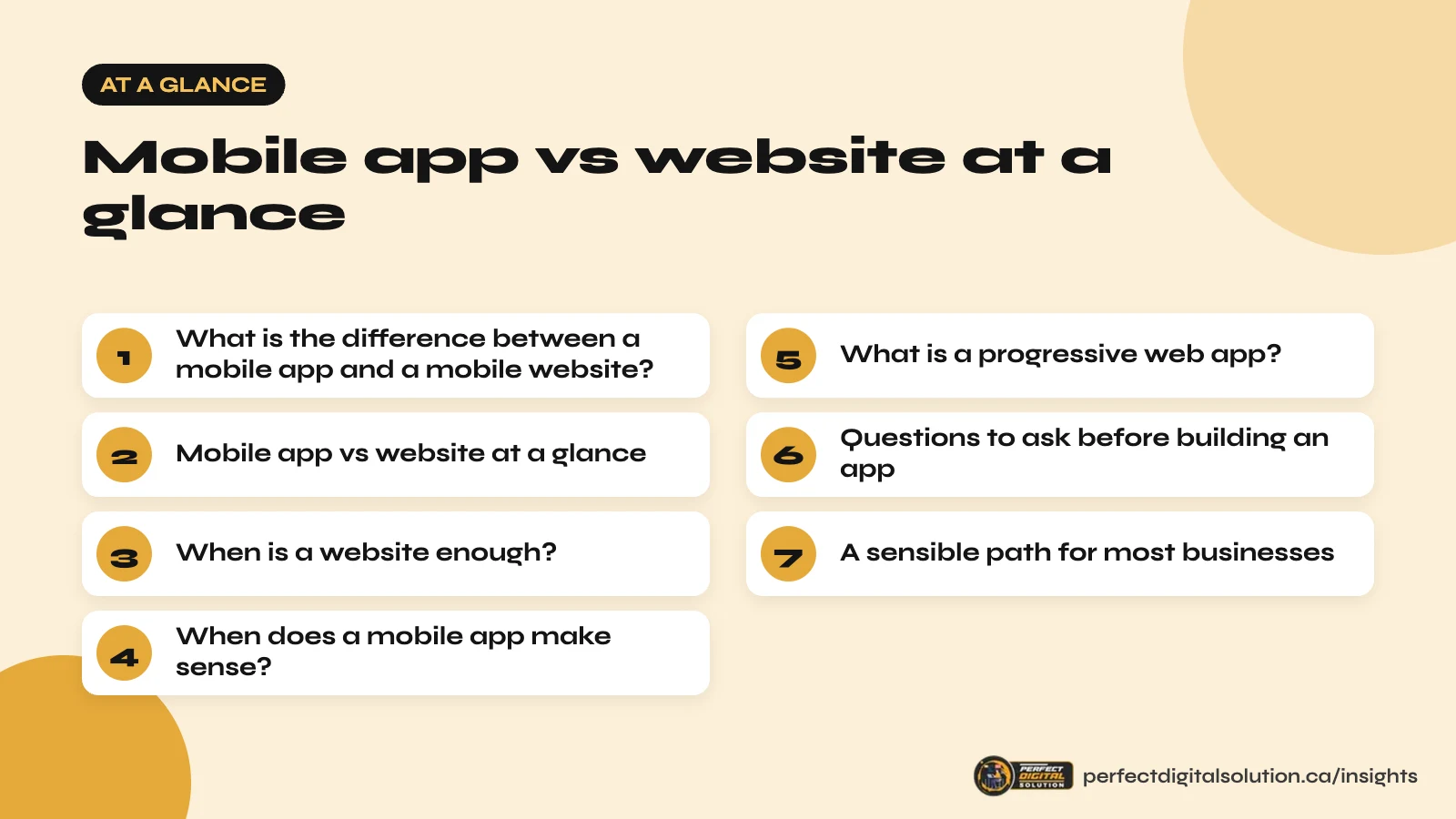
When is a website enough?
A website is usually the right first step when people visit occasionally, for example to learn about services, book an appointment or buy a product. Google also uses the mobile version of your site for indexing and ranking, so a strong mobile website is essential for search visibility either way.
Our web design service builds mobile-first websites for exactly this reason.
When does a mobile app make sense?
An app is worth considering when it solves a problem a website cannot solve as well. Good signs include:
- Customers use the service weekly or daily, such as ordering, booking or tracking.
- You need push notifications, offline use, camera, GPS or Bluetooth.
- Users log in to manage accounts, loyalty rewards or subscriptions.
- The app is the product itself, such as a booking platform or marketplace.
Have an app idea? We can help you decide between a website, a progressive web app or a native app before you invest. Discuss my app idea.
What is a progressive web app?
A progressive web app (PWA) is a website built with modern web technologies so it can be installed on a phone’s home screen, load quickly and work with limited connectivity. It can be a cost-effective middle ground: one build, discoverable on the web, with some app-like features.
PWAs have limits compared with native apps, especially for advanced device features and some iOS capabilities, so the right choice depends on your feature list.
Questions to ask before building an app
- What will users do in the app that they cannot do on the website?
- How often will they open it?
- Which features need the phone itself, such as camera or GPS?
- Do you need iOS, Android or both?
- Who will maintain it, update it and respond to app store requirements?
- How will people find out about the app and download it?
A sensible path for most businesses
Start with a fast, mobile-friendly website and learn what customers use most. If the same tasks are repeated often, such as reordering or booking, consider a PWA or a native app for those features. Our app development service covers Android, iOS and web apps, and we always start with the problem rather than the technology. If you are still planning a site, our guide on what affects website cost in Canada is a good place to begin.
Related reading: How to Plan a Mobile App: From Idea to App Store Launch and Native vs Cross-Platform App Development: Which Is Right for Your Business?.
Frequently asked questions
Sources
- Google Search Central: Mobile-first indexing best practices
- web.dev: Progressive Web Apps
- Apple: App Store Review Guidelines
Written by the Perfect Digital Solution team. We use AI tools to support research and drafting, and every fact in this article is checked by our team against the sources listed above.